Hi everyone, after a long gap, joining you all again in the spiritual journey. Like to discuss on a simple and sensational question, which I heard every where in last four years.
Who am I? Why I am born in this world? What is the meaning of life? What is death? What is beyond death? Why we are born and death? The same questions been repeated everywhere and every-time. Let me give an simplified answers which I experienced and feel so far within thyself.
Who am I? I was born when thy body came out of the womb of my mother. Then insist the body started to breath and stared to cry out, I was born. They named this body some XYZ. The name XYZ added not only the name to the body but also an religion, caste everything which is followed in that so called society. So without knowing anything I was born along with me, its now know as my identity. If only I born without an Identity and call myself just an human being like we tell its an cat, an dog, an lion. I am human an freedom or emptiness been created. But we create an identity. This identity creates the problem, born now started to grow, now by 3 yrs this XYZ starts to tell, Its mine. It wanted to rule or own what all it likes. So he wanted to be an owner to the thinks he likes. He cries, fights to get the desire. Where is this idea gets into him, is comes out or its goes in by absorbing from the outside world. Human is an creature who can absorb thinks easily and rapidly. Human cant create things without seeing, he absorb everything around him to create something out from his absorption. Like an flight from an bird, an house from an nest or cave, it goes on. So now he start to own things for himself. He grows to talks the language which he absorb, the more he absorb the more he is departed from himself. He always wanted to know what is outside him then knowing whats inside him. He gets millions of thoughts when he is even sits alone for an 5 minutes time. What is the reason behind this enormous thoughts. Who create it and from were it keeps on rising?
Rising of thoughts starts from the day we absorb the outer world than the inner. The more we absorb the more we spend our energy, this create the desire within us, say if an boy sees a Ball, we cries for it and gets an Ball, there comes the desire. We play for some time and once his desire is fulfilled he moves and search for something else. Like this his desire keeps on changing without any control. So who rise this desire? Desire was created by your Mind. Body and Mind are not separated, they both travel hand to hand. Each cell of your body as an mind. So what your 5 senses takes as an input are converted into an Thought by the process of the Mind. The mind loves adventure, it seek new things. When you get this it know what is the output of it. But when you cant get it, it create an negative thought an depression, stress and ends up in diseases. So its all your mind which we spend outward creates so much confusion.
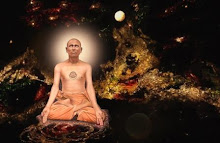
If only we reduce the fast absorption to an slow one, then our thought process also slows down, taking one into our mind and working on it and give you success. If you stop absorbing the outer world, and start to see your inner self, the same will happen within you now. The mind starts to go deep inside to know what is inside us. Then the thoughts reduces day by day, an emptiness created within us. Where the Mind and Body connects to silence of emptiness. Now your I - dies. The mind and body feels there is something more powerful within us but we cant find were is it. So they move deeper and deeper and find that light where the body, mind and soul merge. This state will shows who we are, how we are connected to this universe.

This can be experienced by everyone, when you love thyself unconditionally, without any expectation. When you start love yourself, you know you can love everyone around you. You can feel the same in everything which you see and feel, you can see everything as one family. All are made of atoms. Without atoms nothing can evolve. Now we come across the 5 elements land, water, fire, air and ether or space. From the empty space the heat is created which is in the form of Air, by the fiction of the space and air molecules Fire is created, from the fiction of air and fire- water is created, from fiction of air, fire and water - land is created. By the fiction of space, air, fire, water and land - Life is created. Cell is formed. This cells divides to form n number of species. Today we human are nothing but an trillion of cells. Only the number of cells may differ, but all living organisms are made only by cells. Without that there is no life in this planet.

This shows that all are one, with different shape, size and appearance. But all have the same life cycle in general, an male and female, female lay eggs or give birth. Female are creators, Male are protector. When they both have a clash, they destroy themselves. By now you can understand that Who are we? Who am I? I am the one who is everywhere, but only the number, size, shape and appearance differs. I am an Soul, having a different body. The lesser we absorb, the longer we can live, like an tortoise.


Why we are born in this world? We are born to LOVE, CARE, HELP and SUPPORT. We need to love everything in this world, we are born for that, not to show who is more powerful or more rich. All born without anything and die without anything. You born for love and you die with the love of someone. When love more you can see at your death bed the n number of people to shed tears for you. If you were jealous or greedy, no one will turn to your death, if they come also no one care or feel for your death. If you take any personality from history who is still loved by people is not because of there money, power or education. Its all because the LOVE and CARE which they showed for this society.

What is the meaning of LIFE? When we understand who we are and what for we are born, then it shows the meaning of Life clearly.
 What is Death? Death is just an beautiful movement of life as we don't no or experience the pain of birth, we never know the pain of death. Its is the movement when your I - body dies and understand the real state. That you are not the body, you are the soul. Its like you depart or detach from the body as if you remove an old dress. When there is no use, or no energy or happiness inside this body, when your soul not feeling comfortable then it just leaves the body. When you leave only you understand the truth, that its all what you were experiencing were all just an dream which is called as an Life. Its simply stated as Mayai or illusion. If we understand this, and fear not for death, we will do more good things in this world.

What is beyond death?
Beyond death is the emptiness, the reality of once true life. Traveling back to the source. As we sleep and wake up daily to start our routine, once we die we wake from an dream and move into the real world. This can be done even when we are alive, which as total as astral travel.
Why we are born and death?
Its an experience of the soul, it comes to do some work. All are born for some reason, it can be to feed an dog, to plant an tree, to love an family. In general everything is connected by this single word LOVE. Born for mother love, grown and make love with opposite sex, give birth and love your kids. Birth and death is like a dream, when we sleep we fulfill all our thoughts in the form of dreams. Its just like dream inside an dreams. Hope you got an clear idea. Calm your mind, move it inward and feel the emptiness within yourself and understand the connectivity of thyself with this universe.

Who am I? Why I am born in this world? What is the meaning of life? What is death? What is beyond death? Why we are born and death? The same questions been repeated everywhere and every-time. Let me give an simplified answers which I experienced and feel so far within thyself.
Who am I? I was born when thy body came out of the womb of my mother. Then insist the body started to breath and stared to cry out, I was born. They named this body some XYZ. The name XYZ added not only the name to the body but also an religion, caste everything which is followed in that so called society. So without knowing anything I was born along with me, its now know as my identity. If only I born without an Identity and call myself just an human being like we tell its an cat, an dog, an lion. I am human an freedom or emptiness been created. But we create an identity. This identity creates the problem, born now started to grow, now by 3 yrs this XYZ starts to tell, Its mine. It wanted to rule or own what all it likes. So he wanted to be an owner to the thinks he likes. He cries, fights to get the desire. Where is this idea gets into him, is comes out or its goes in by absorbing from the outside world. Human is an creature who can absorb thinks easily and rapidly. Human cant create things without seeing, he absorb everything around him to create something out from his absorption. Like an flight from an bird, an house from an nest or cave, it goes on. So now he start to own things for himself. He grows to talks the language which he absorb, the more he absorb the more he is departed from himself. He always wanted to know what is outside him then knowing whats inside him. He gets millions of thoughts when he is even sits alone for an 5 minutes time. What is the reason behind this enormous thoughts. Who create it and from were it keeps on rising?
Rising of thoughts starts from the day we absorb the outer world than the inner. The more we absorb the more we spend our energy, this create the desire within us, say if an boy sees a Ball, we cries for it and gets an Ball, there comes the desire. We play for some time and once his desire is fulfilled he moves and search for something else. Like this his desire keeps on changing without any control. So who rise this desire? Desire was created by your Mind. Body and Mind are not separated, they both travel hand to hand. Each cell of your body as an mind. So what your 5 senses takes as an input are converted into an Thought by the process of the Mind. The mind loves adventure, it seek new things. When you get this it know what is the output of it. But when you cant get it, it create an negative thought an depression, stress and ends up in diseases. So its all your mind which we spend outward creates so much confusion.
If only we reduce the fast absorption to an slow one, then our thought process also slows down, taking one into our mind and working on it and give you success. If you stop absorbing the outer world, and start to see your inner self, the same will happen within you now. The mind starts to go deep inside to know what is inside us. Then the thoughts reduces day by day, an emptiness created within us. Where the Mind and Body connects to silence of emptiness. Now your I - dies. The mind and body feels there is something more powerful within us but we cant find were is it. So they move deeper and deeper and find that light where the body, mind and soul merge. This state will shows who we are, how we are connected to this universe.

This can be experienced by everyone, when you love thyself unconditionally, without any expectation. When you start love yourself, you know you can love everyone around you. You can feel the same in everything which you see and feel, you can see everything as one family. All are made of atoms. Without atoms nothing can evolve. Now we come across the 5 elements land, water, fire, air and ether or space. From the empty space the heat is created which is in the form of Air, by the fiction of the space and air molecules Fire is created, from the fiction of air and fire- water is created, from fiction of air, fire and water - land is created. By the fiction of space, air, fire, water and land - Life is created. Cell is formed. This cells divides to form n number of species. Today we human are nothing but an trillion of cells. Only the number of cells may differ, but all living organisms are made only by cells. Without that there is no life in this planet.

This shows that all are one, with different shape, size and appearance. But all have the same life cycle in general, an male and female, female lay eggs or give birth. Female are creators, Male are protector. When they both have a clash, they destroy themselves. By now you can understand that Who are we? Who am I? I am the one who is everywhere, but only the number, size, shape and appearance differs. I am an Soul, having a different body. The lesser we absorb, the longer we can live, like an tortoise.


Why we are born in this world? We are born to LOVE, CARE, HELP and SUPPORT. We need to love everything in this world, we are born for that, not to show who is more powerful or more rich. All born without anything and die without anything. You born for love and you die with the love of someone. When love more you can see at your death bed the n number of people to shed tears for you. If you were jealous or greedy, no one will turn to your death, if they come also no one care or feel for your death. If you take any personality from history who is still loved by people is not because of there money, power or education. Its all because the LOVE and CARE which they showed for this society.

What is the meaning of LIFE? When we understand who we are and what for we are born, then it shows the meaning of Life clearly.


Beyond death is the emptiness, the reality of once true life. Traveling back to the source. As we sleep and wake up daily to start our routine, once we die we wake from an dream and move into the real world. This can be done even when we are alive, which as total as astral travel.
Why we are born and death?
Its an experience of the soul, it comes to do some work. All are born for some reason, it can be to feed an dog, to plant an tree, to love an family. In general everything is connected by this single word LOVE. Born for mother love, grown and make love with opposite sex, give birth and love your kids. Birth and death is like a dream, when we sleep we fulfill all our thoughts in the form of dreams. Its just like dream inside an dreams. Hope you got an clear idea. Calm your mind, move it inward and feel the emptiness within yourself and understand the connectivity of thyself with this universe.